
6ish Inches Under...
What is really happening beneath our feet?

Walking on a beach bare foot has always been my favorite moments in time. The ocean water crashing onto land. Specifically Ocean Beach, San Francisco, California. I have an Uncle that use to live in Outer Sunset when I was growing up. Visiting that cold windy beach was a gift. Swimming in the water that left your bones chilled to the core! Ah yes, good times indeed.
Now when I walk on the beach I often think of those memories but now it’s more how the water washes away and falls through the pebbles of sand so quickly. I know weird right? Anyway, there is a really good reason why! And it has to do with the magic of pore space and how dense the pebbles are. BOOM, You’ve now entered Soil Science…
Here are Keywords and definitions that will be coming up:
Aggregates - Close cluster or mix of small particles of soil and/or organic matter of varying sizes that are bonded together; sand, gravel, or small rocks in soil; and/or small sand, gravel, or small rocks used under paved surfaces.
Clay - Soil particles with a typical grain size less than 0.004mm
Horizon - A layer of soil within the soil profile
Loam - Soil texture classification based on a certain ratio of sand, silt, and clay. Considered ideal for plant growth
Macropore - Relatively large space between soil particles that is usually air filled and allows for water movement and root penetration. Contrast w/ micropore
Micropore - Space between soil particles that is relatively small and likely to be water filled. Contrast to Macropore
Organic Layer - Layer of organic matter at the soil surface
Parent Material - Soil bedrock or base material which soil profile develops
Sand - Soil particles with a size between 0.006 and 2mm in diameter
Soil Profile - Vertical section through the soil and all of the soil horizons.
Silt - Soil particles with a grain size between 0.004 and 0.062mm (coarser then clay particles, but finer then sand particles)
Soil Texture - Relative fineness or coarseness of a soil due to particle size ( sand, silt, clay)
Soil Structure - The arrangement of soil particles into aggregates.

So what is soil?
Soil can be classified into 3 main groups of particles - sand, silt, & clay
SAND particles are are LARGER particles vs CLAY particles that are FINE textured. SILT particles are in the middle of both.
The soils that we have today are from millions of years of biological, chemical, and physical weathering of PARENT MATERIAL(underlying bedrock).
The different layers, or HORIZONS, and different colors that we can see in the soil is called the SOIL PROFILE.
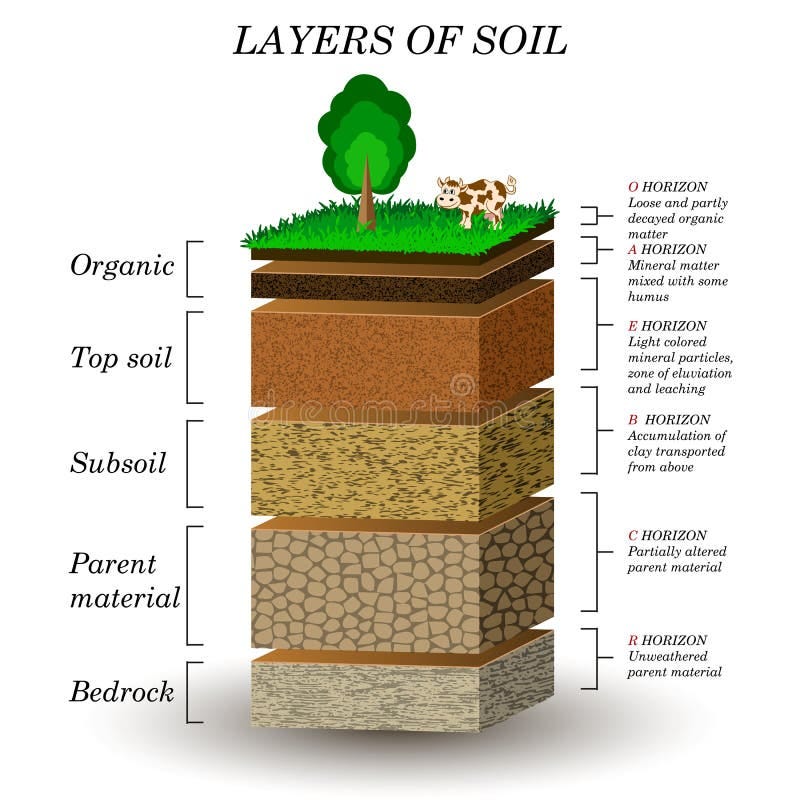
Vertical section of Soil Profile: O-A-E-B-C
All though I have included the O Horizon above and in the picture shown, it is important to know that when talking about the soil profile, the ORGANIC LAYER is not included. It is its own layer because it’s not always present in all environments (groomed properties such as parks, streets, well maintained private properties).
When we are talking about the best case scenario of soil for plants and trees to grow the ideal range is 50% soil and 50% pore space (which would include water and air, 25% each). If we are able to get a little bit of Organic matter that will be a huge contributor to tree health and longevity. A mixture of the soil texture would be different variations of LOAM. Such as sand, loamy sand, sandy loam, sandy clay loam, loam, silt loam, silt, silty clay loam, clay, clay loam, sandy clay and silty clay. Which makes, The Soil Triangle…
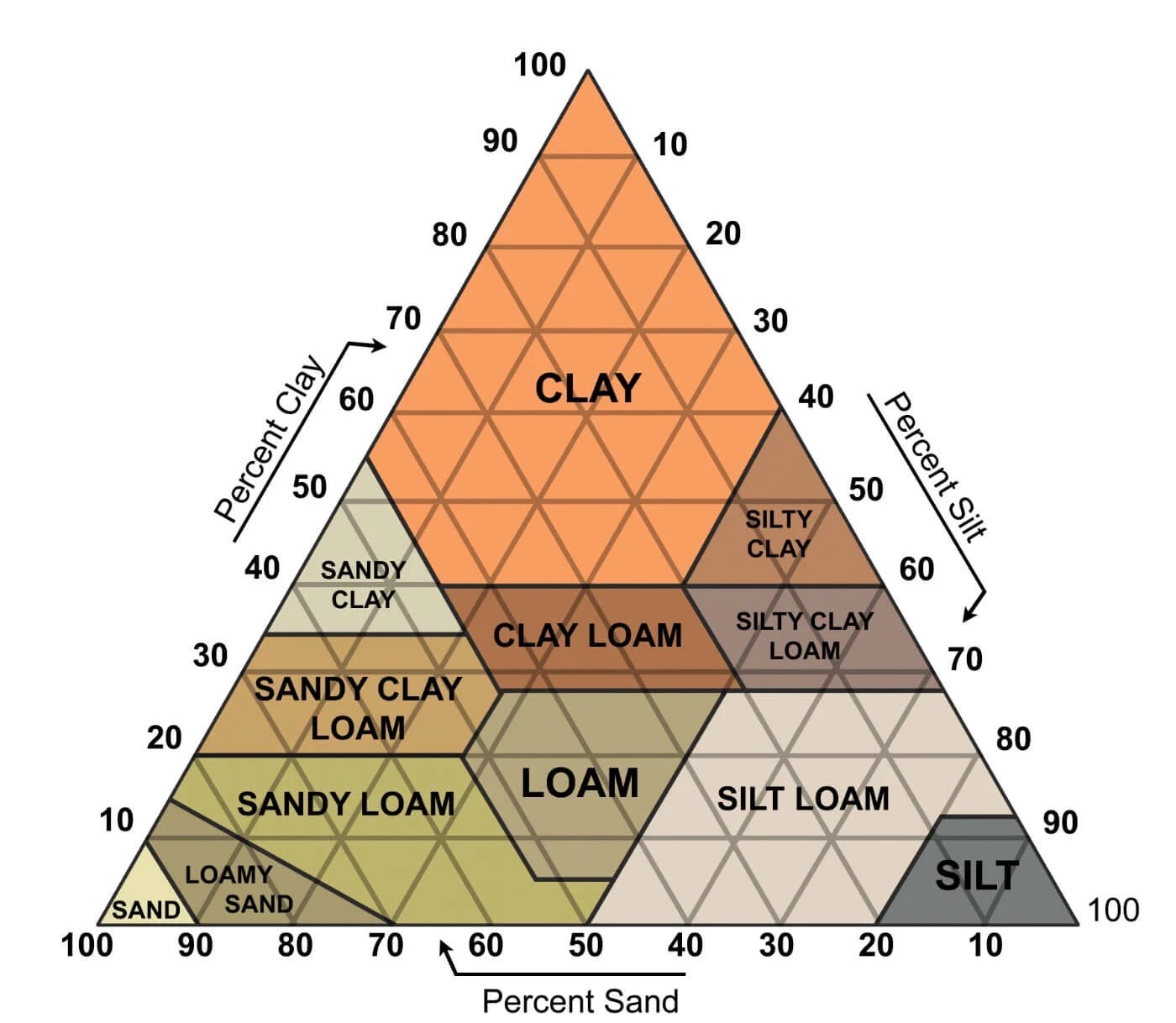
Soil Triangle Triangle
When we start to get in between the soil, we hope to find space, or pores, that allow for root growth, water, insects, to all support healthy soil. The pore space in between these particles are labeled either MACROPORES or MICROPORES. As the names imply, macropores are large spaces between AGGREGATES and micropores are between the soil particles. Macropores are spaces too large to hold water. When they drain, they become the pore space responsible for most air. Micropores, are the pores that are filled with water that will be available for plants.
SO, Earlier I was talking about walking on the beach and the sweet sandy…uhhh sand…particles…, we will go with that for now… The sand particles, remember, are larger particles that don’t bind together (don’t have a strong magnetic charge) as much as clay particles. The clay particles, much MUCH smaller, they are what make that space in between each other harder for water to drain because of a stronger positive magnetic charge.
Sand = larger pore space = quicker draining of water = leaving all that water filled space now empty and filled with air = Macropores.
Clay = small pore space, less or no water able to drain, more easily filled and held(strong magnetic charge) = micropores.
Silt = …..somewhere in the middle of both =P

It’s all connected….
We will go ahead and wrap this part of soil up to let that….sink in…! xD
Any questions so far? Anything to add? Drop it in the comments below or DM if you have any questions on specific different or current discussions.
COMING UP NEXT WEEK: We will dive in a little further with how these particles work with water, PH, and more!
TREE OF THE WEEK: I found this sprout a few months ago growing in my planter box. Can you guess what the species is based off the leaf structure?
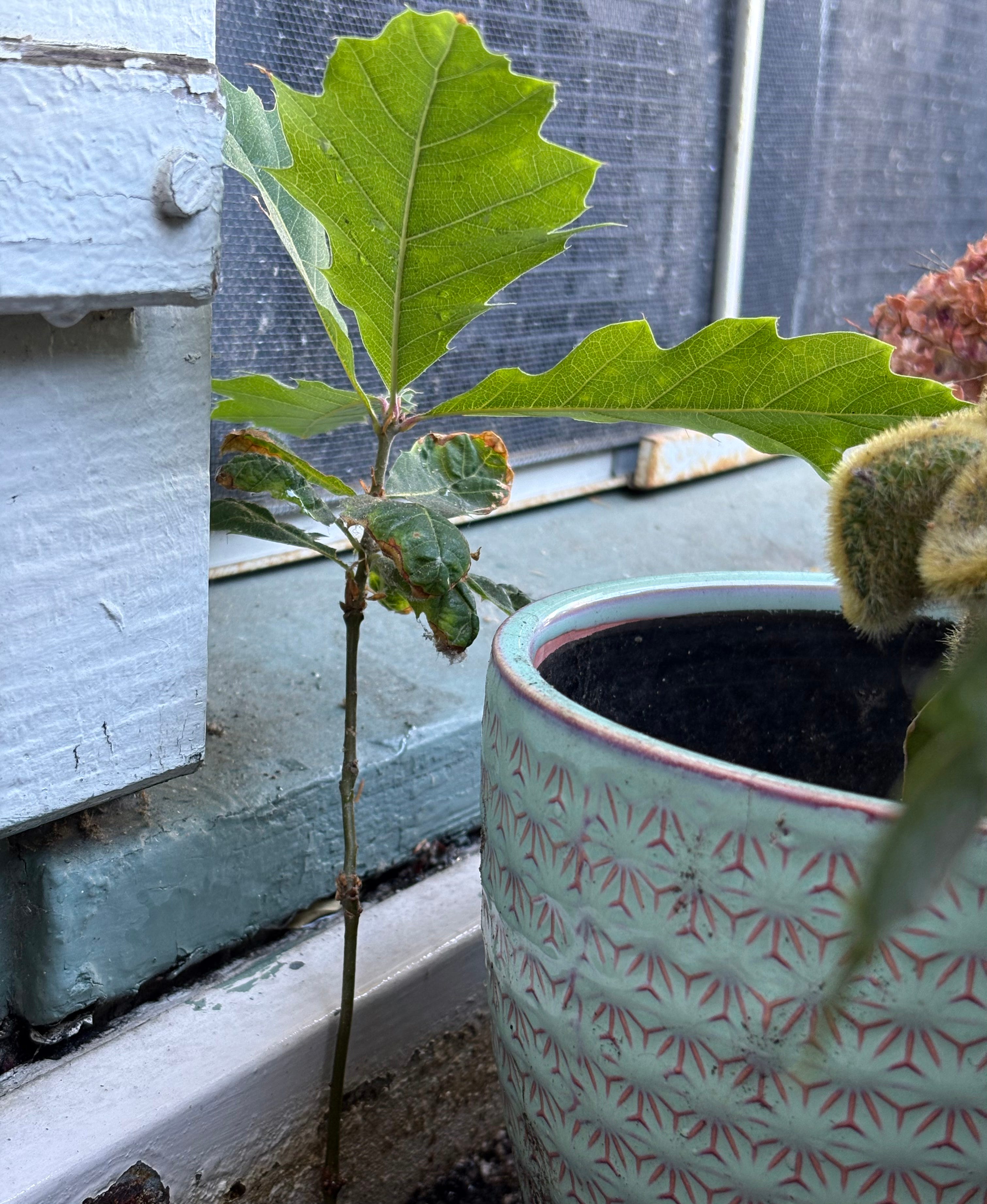
I’ll give you a hint…
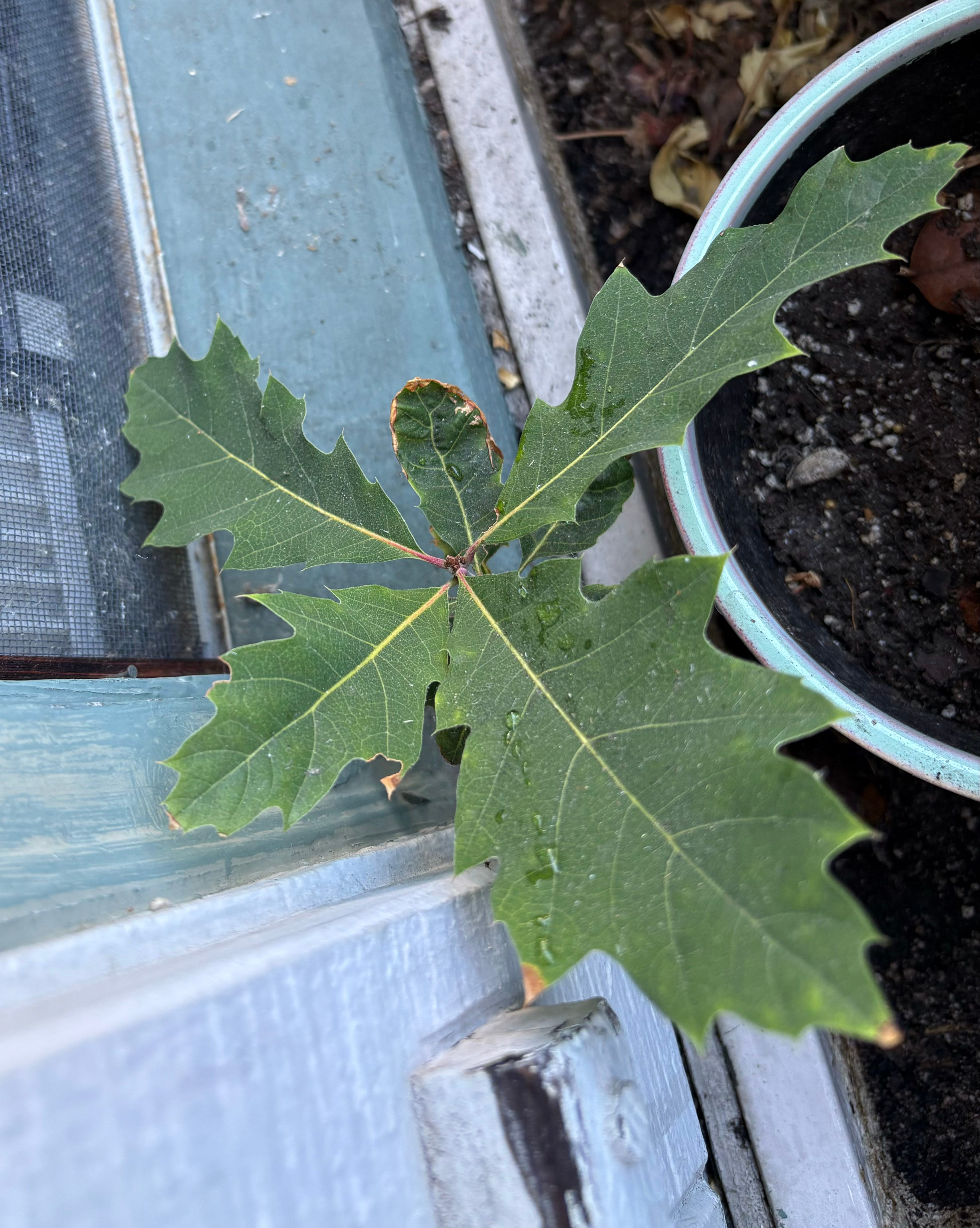
…they are native in California and are deciduous…
…Drop your guesses below!
Everyone have a good rest of your week
Yours Truly Tree Friends,
Nathan Franco